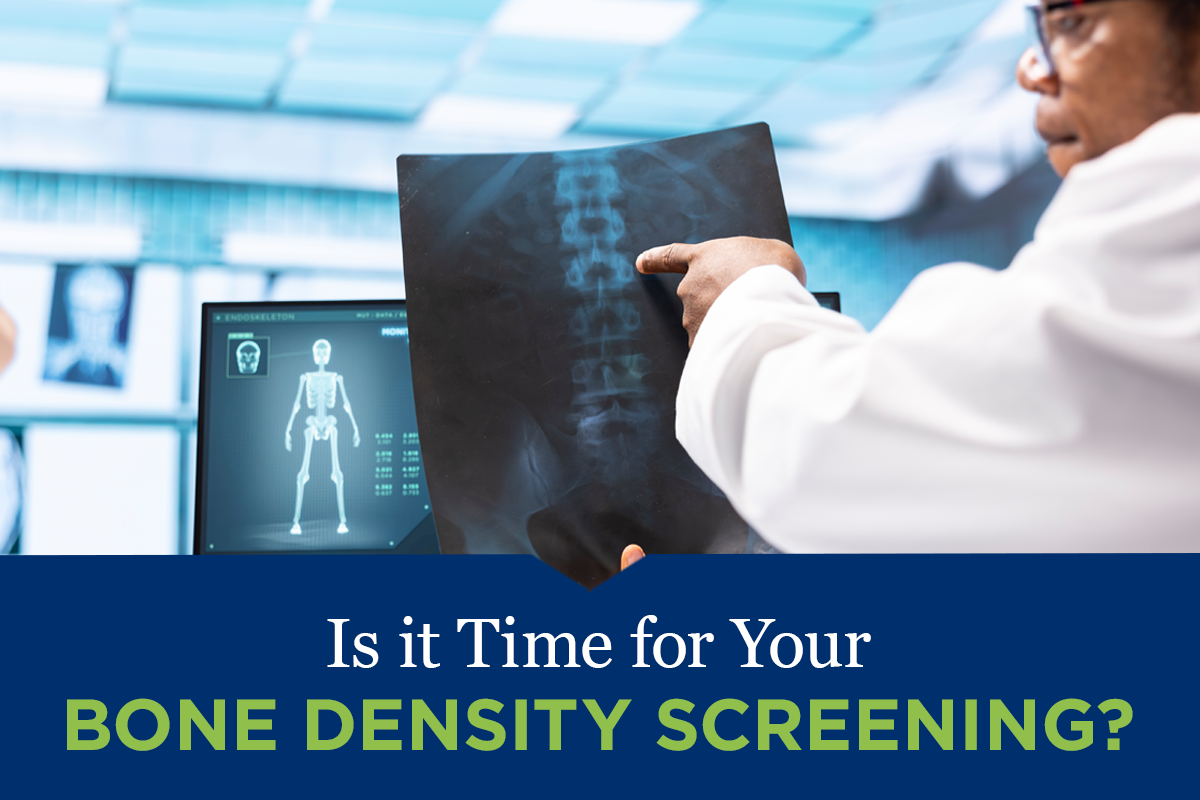
Your bones do a lot for you. Every day, they carry you through busy workdays, weekend walks, and time with the people you love. Over the years, though, bones can quietly lose strength without any signs at all. Thankfully, a simple bone density screening can check on your bone health long before a problem starts. So here’s a gentle guide to who needs one and when.
Why Bone Health Deserves Your Attention
Osteoporosis is often called a silent disease. In many cases, a broken bone is the very first clue. According to the CDC, nearly 1 in 5 women and 1 in 20 men over age 50 are affected by osteoporosis. Even more striking, the Bone Health and Osteoporosis Foundation reports that about 1 in 2 women over 50 will break a bone because of it.
For women, timing matters too. Specifically, in the five to seven years after menopause, women can lose 20% or more of their bone density.. For that reason, catching bone loss early is key.
Who Needs a Bone Density Screening?
Currently, the CDC recommends a bone density screening for:
- Women age 65 and older
- Women ages 50 to 64 who have certain risk factors
Men can lose bone strength too. So if you’re a man with risk factors, it’s worth bringing up testing with your doctor.
Risk Factors to Know
According to Mayo Clinic and the CDC, your provider may suggest testing sooner if you have:
- Lost 1.5 inches or more of height, which may signal small fractures in your spine
- Broken a bone more easily than expected
- Taken steroid medicines, such as prednisone, for a long time
- A drop in hormone levels after menopause or from certain cancer treatments
- Low body weight, certain intestinal disorders, or multiple sclerosis
If any of these sound like you, it’s worth asking your provider whether you need a bone density screening sooner.
What to Expect During the Test
It’s natural to wonder what the test is like. Rest easy, because a bone density test, also called a DXA scan, is quick and painless. During the exam, you simply lie on a padded table while a scanner arm passes slowly over your body. In most cases, the whole thing takes just 10 to 30 minutes. Better still, the radiation is very low.
To get ready, keep these tips in mind:
- First, skip calcium supplements for 24 hours before your exam.
- Next, wear loose, comfortable clothes without metal zippers, buttons, or belts.
- Also, let your provider know if you’ve recently had a barium test or contrast dye, or if you might be pregnant.
Afterward, your results come back as a T-score. This number compares your bone density to that of a healthy young adult. In simple terms, a score of -1 or higher is healthy. From there, a score between -1 and -2.5 points to osteopenia, or low bone mass. Finally, a score of -2.5 or lower suggests osteoporosis.
Strong Bones Start with One Step
In the end, osteoporosis may be silent, but you don’t have to wait for a broken bone to find it. Instead, knowing your risk and when to test puts you back in control. Once you have your results, you and your provider can build a plan to protect your bones for years to come. Ultimately, a bone density screening is one of the simplest steps you can take for a healthier, more active future.
Ready to check your bone health? Memorial Health Bone Density Services offers bone density testing right here in Lawton. Before you call, you’ll need an order from your physician. Then, call Central Scheduling at 580.250.5800 to book your appointment.
Resources:
- CDC: DEXA Scan Facts and Stats
- Mayo Clinic: Bone Density Test
- Bone Health and Osteoporosis Foundation: General Facts
- Memorial Health System: Bone Density Services
Disclaimer:
The Memorial Health System of Southwest Oklahoma (MHS) website does not provide specific medical advice for individual cases. MHS does not endorse any services obtained through information provided on this site, articles on the site or any links on this site.
Use of the information obtained by the Memorial Health System of Southwest Oklahoma website does not replace medical advice given by a qualified medical provider to meet the medical needs of our readers or others.
While content is frequently updated, medical information changes quickly. Information may be out of date, and/or contain inaccuracies or typographical errors. For questions or concerns, please contact us at contact@memorialhealthswok.com.