
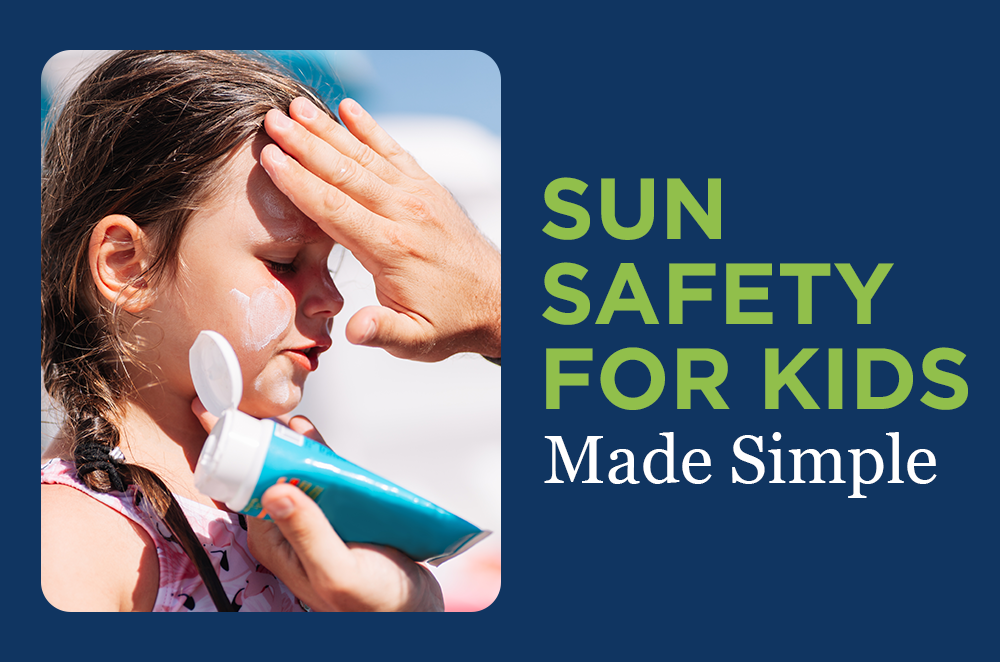
Summer days at the pool or park are some of the best memories your kids will make. But here’s the thing: sun safety for kids matters more than most parents realize. A child’s skin is thinner and far more vulnerable to UV damage than an adult’s. Just a few blistering sunburns during childhood can double the risk of skin cancer later in life. The good news? A few smart habits now can protect your little ones for decades to come. Let’s break down exactly what you need to know.
Why Sun Safety for Kids Starts with Their Skin
Children’s skin is still developing the natural defenses that adults rely on to fend off harmful UV rays. Because of this, sunburns happen faster and hurt more. The damage also adds up over time. In fact, dermatologists point to childhood sun exposure as one of the biggest predictors of skin cancer risk in adulthood. That’s exactly why sun safety for kids deserves a spot on every parent’s summer checklist. It’s easier than you might think.
Sunscreen Rules: Infants vs. Toddlers
Not all sunscreen advice applies equally across ages. Here’s how to get it right at every stage:
- Under 6 months: The American Academy of Pediatrics recommends keeping infants out of direct sunlight entirely. Their skin produces too little melanin to handle UV exposure safely, so shade, hats, and lightweight clothing should be your first line of defense. If shade isn’t available, a small amount of mineral-based sunscreen on exposed areas like the face and hands is acceptable.
- 6 months and older: Switch to a broad-spectrum sunscreen with SPF 30 or higher. Look for mineral formulas with zinc oxide or titanium dioxide, since they tend to be gentler on sensitive skin.
- Toddlers and preschoolers: Apply sunscreen generously 15 to 30 minutes before heading outside. Reapply every two hours, or right after swimming or heavy sweating.
- Don’t forget the easy-to-miss spots: ears, the back of the neck, tops of feet, and part lines in the hair.
Dress for Defense
Sunscreen is only one piece of the puzzle. When it comes to sun safety for kids, dressing them strategically can cut UV exposure dramatically. It’s also one less thing to remember to reapply. Try these simple swaps:
- Lightweight, long-sleeve shirts and pants made from tightly woven fabric block more UV rays than you’d expect, while still keeping kids cool.
- A wide-brimmed hat protects the face, ears, and neck, which are common spots for sunburn and, later, skin cancer.
- UV-blocking sunglasses shield developing eyes from long-term sun damage.
- Whenever possible, plan outdoor play before 10 a.m. or after 4 p.m., when the sun’s rays are less intense.
What to Do If a Sunburn or Heat Mishap Happens
Even with the best planning, accidents happen. If your child gets a mild sunburn, cool baths, fragrance-free moisturizer, and plenty of water can ease the discomfort. However, watch closely for signs that call for prompt medical attention, including blistering, fever, chills, vomiting, or a sunburn that covers a large area of the body. Heat exhaustion is another summer risk to watch for. Don’t ignore symptoms like dizziness, clammy skin, or unusual fatigue.
When to See a Doctor
Even the best sun safety routine can’t prevent every mishap. If a sunburn or heat mishap escalates quickly, you don’t have to wait it out at home. Our LCHC Southwest Pediatric Rapid Care clinic on SW Lee Blvd is ready for exactly these kinds of urgent summer moments. They offer fast and friendly care when your child needs it most. Come by for any pediatric urgent medical need or call (580) 355-5242. And for routine wellness checks that keep your family’s sun safety plan on track all season long, our team at LCHC Lawton Pediatrics is here to help.
Ready for a Safe Summer?
Sun safety for kids doesn’t have to be complicated. Choose the right sunscreen for your child’s age. Dress for defense with lightweight coverage and a good hat. Know the warning signs that mean it’s time to call in the professionals. With a little preparation, your family can enjoy every sunny day this summer with confidence and fewer worries about tomorrow.
Resources:
https://thenccs.org/sun-safety-protecting-your-skin
https://www.healthychildren.org/English/safety-prevention/at-play/Pages/Sun-Safety.aspx
Disclaimer:
The Memorial Health System of Southwest Oklahoma (MHS) website does not provide specific medical advice for individual cases. MHS does not endorse any services obtained through information provided on this site, articles on the site or any links on this site.
Use of the information obtained by the Memorial Health System of Southwest Oklahoma website does not replace medical advice given by a qualified medical provider to meet the medical needs of our readers or others.
While content is frequently updated, medical information changes quickly. Information may be out of date, and/or contain inaccuracies or typographical errors. For questions or concerns, please contact us at contact@memorialhealthswok.com.